During a Grade 3 Women's Day card-making lesson — done entirely in English, honoring inspiring women — a student looked up and asked: "Is this still English class?"
It was the best question anyone had asked all year.
What was happening in that classroom
The students were researching inspiring women, writing cards in English, illustrating them, and preparing to share them with their families. The room was loud in the best way — not chaotic, but alive. Students were asking each other how to spell words, debating which woman deserved the most space on their card, and occasionally switching to Mandarin when English ran out. Nobody was sitting still waiting for the next instruction.
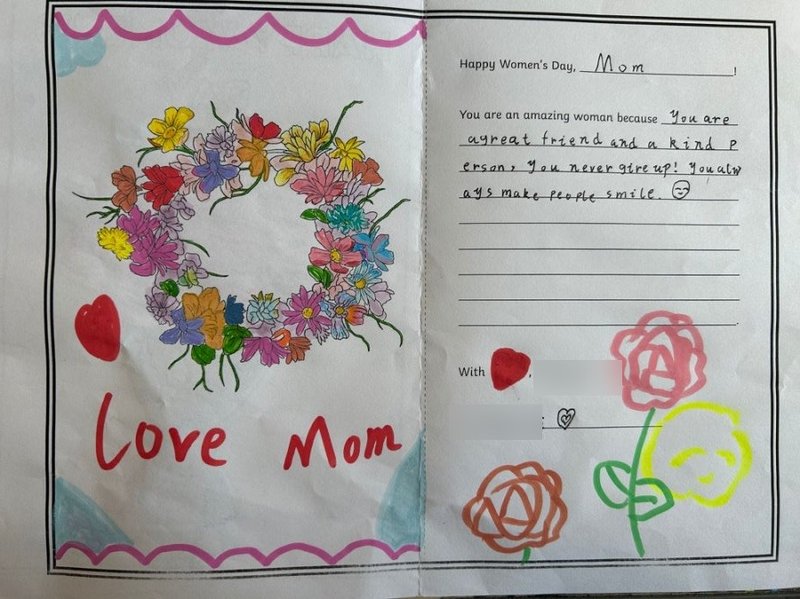
When my student asked "Is this still English class?" he wasn't confused. He was genuinely surprised. Because in his experience, English class meant repeating phrases after the teacher, filling in blanks, or reading from a textbook. What was happening in the room that day felt different. It felt like real life.
What I realised
His question was proof that learning can be personal, creative, and still academically rigorous — and that students notice when those things are all happening at once. He had been using English for a real purpose, and it hadn't felt like a lesson. That is exactly what IB inquiry-based learning is supposed to do.
Looking back at my early years of teaching, I can see that I was already doing "IB-like" things — storytelling, cultural projects, real-world topics — without a structured framework to explain why they worked. What the IB gave me was the language and the architecture: transdisciplinary themes, central ideas, lines of inquiry, learner profile attributes. These aren't restrictions on creativity. They're the reason the creativity can go somewhere.
The lesson I would teach differently now
If I taught that Women's Day lesson today, I would add a more explicit inquiry provocation at the start — a See-Think-Wonder moment with a photograph or object connected to one of the women we were studying. I would make the Wonder Wall visible so students could track their own questions. And I would build in a moment at the end where students reflected not just on the woman they chose, but on why they chose her — what that choice revealed about their own values.
The lesson was already good. But good in the IB sense means building in the conditions for students to learn about themselves through the content — not just learn the content.
What his question taught me about language acquisition
My student's surprise was also a clue about how language acquisition actually works. He was so absorbed in the task — the meaning-making, the decision about which woman to write about, the effort to communicate his admiration in English — that the language itself became secondary. He was using English, not performing it.
That distinction is everything. Students who perform English can pass tests. Students who use English can communicate. The gap between those two things is where most language teaching gets stuck — and where authentic, inquiry-driven tasks close the distance.
 Written by