Grade 2 PYP — Exploring Identity Through Storytelling
Identity and storytelling isn't just a unit I teach — it's something I've lived. Building a life and a career across three languages and two very different education systems has taught me how much of who we are comes through the stories we tell and the ones we're told.
See-Think-Wonder routine with a cultural object. Students observe and ask: What do you see? What do you think? What do you wonder? This opens genuine inquiry before any content is introduced.
Family elder visit or recorded folktale. Guided discussion: Who is telling the story? What do we learn about them? How does it connect to our own lives?
Students draw a story memory and share feelings or lessons. Launch a Wonder Wall — students post questions about stories and cultures to investigate further.
Student Action
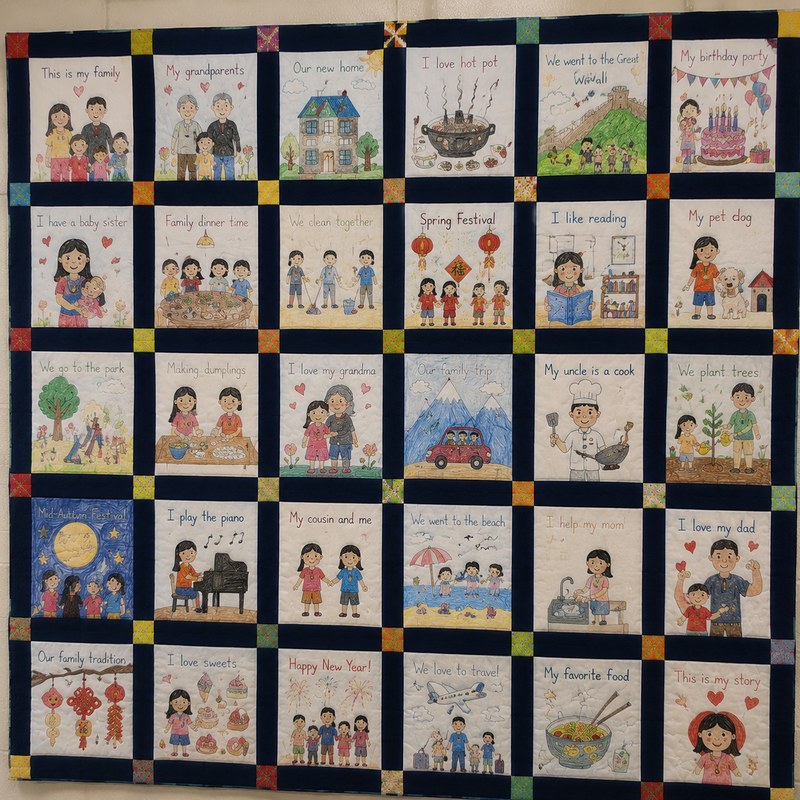
Students interview a family member about a personal or cultural story, contribute to a collaborative class "Story Quilt," and help plan a storytelling showcase for families and the community.
Formative Assessment Design
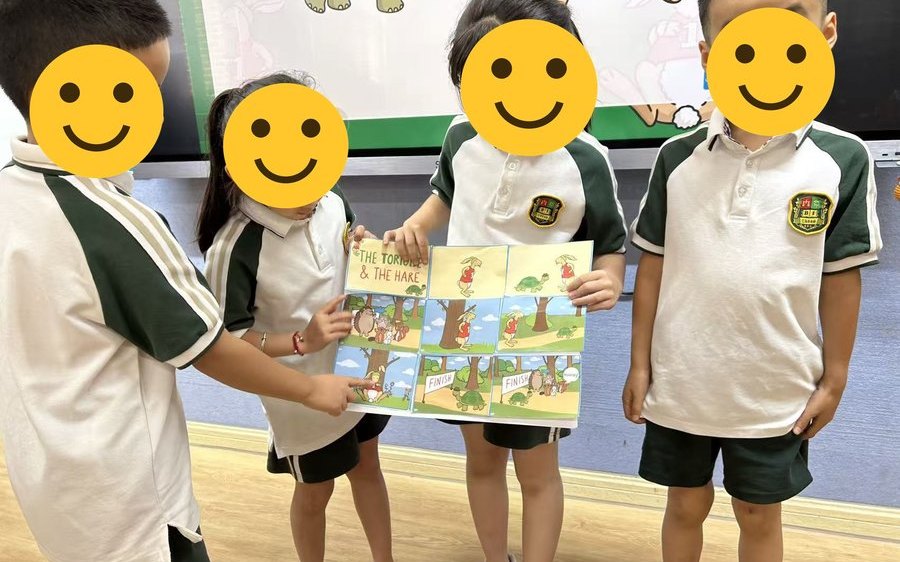
Students move through three progressive tasks: Story Structure (teacher model → guided sequencing → pair retelling → sharing) → Personal Story (preparation → interview → plan → practice → present) → Independent Storytelling Showcase. Each stage builds on the last, ensuring readiness before the summative performance.
Grade 7 MYP — Ordering Food Politely
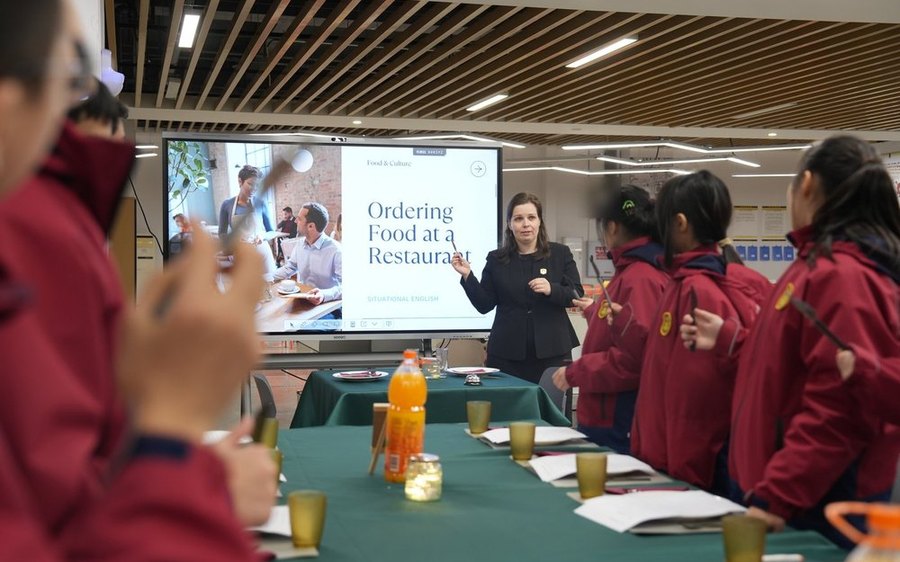
A clinical practice lesson from my Moreland University M.Ed. (Module 8, InTASC Standard 1) — taught to 30 Grade 7 ESL students at BI Zandem Academy, Chongqing. This 15-minute highlight lesson demonstrates bilingual restaurant role-plays integrating scaffolding (I Do → We Do → You Do), UDL principles, and IB learner profile traits.
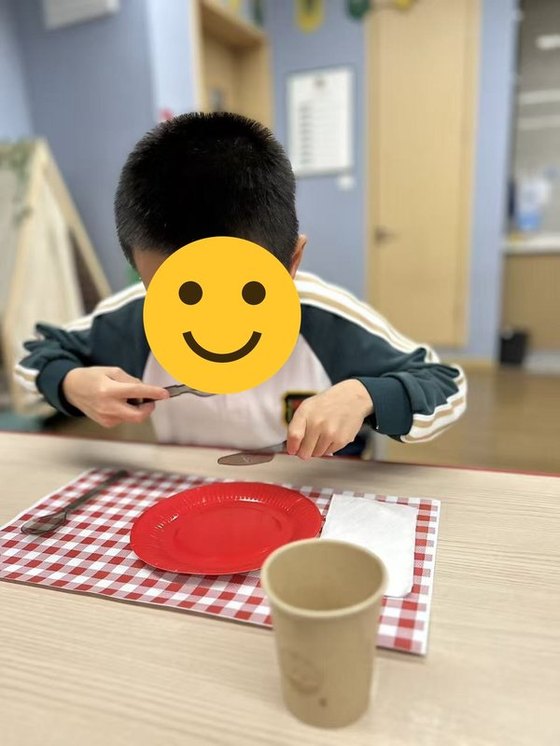
Food-country matching task (vocabulary comprehension). Success criteria: 3 = All correct · 2 = Most · 1 = Few.
Pronunciation & tone check (oral fluency). Success criteria: 3 = Clear and polite · 2 = Mostly correct · 1 = Needs help.
Role-play rubric: 3 = Accurate + polite + culturally aware. Peer and teacher observation.
IB-style reflection chart: 3 = Thoughtful · 2 = Basic · 1 = Minimal. Exit ticket: one polite phrase + one cultural difference.
Key Reflection
Students communicated most confidently during the Chinese-style restaurant dialogue because it reflected familiar cultural norms and reduced anxiety. Once comfortable using polite expressions such as "May I have…" in the Chinese scenario, they successfully transferred these skills to the Western restaurant context. This progression illustrates Vygotsky's Zone of Proximal Development — moving from known to new with appropriate scaffolding.
What I would change
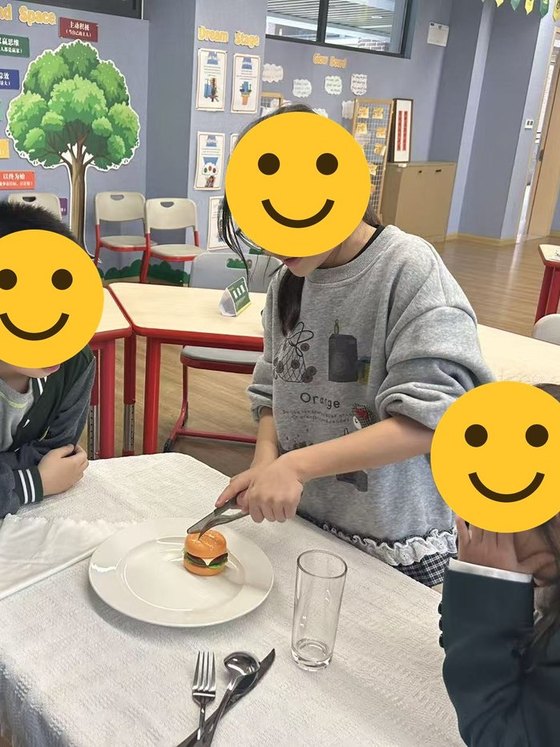
I underestimated the food. My students could not wait to taste it, and once the meal was in front of them they could not concentrate on the dialogue. The table manners part suffered most — they were too hungry to think about how they were holding a fork, they just wanted to finish dinner.
Next time I will make everything that comes before the eating shorter.
Grade 7 MYP — Booking a Hotel Online
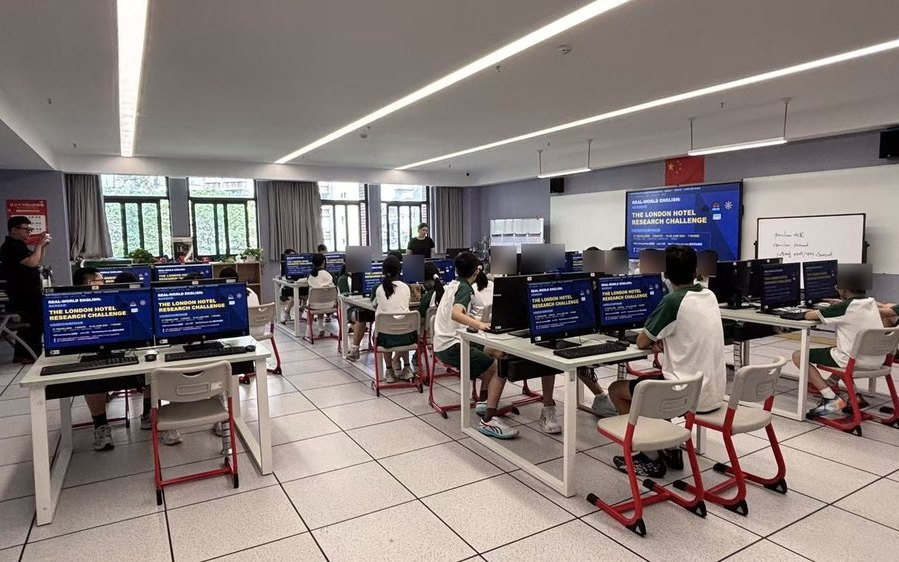
An interdisciplinary unit integrating language acquisition, real-world research skills, and cross-cultural communication — built around a task students will actually face in life: booking a hotel online, in English.
What I would change
I did not expect the website itself to be the obstacle. My students found it hard to navigate a hotel booking site — where to look, which words mattered — and because all of it was in English, simply finding the information took much longer than I had planned. The whole process ran far slower than I expected.
Next time I will give the technical part its own lesson. Only when there are no questions left about how the site works will we move on to the research task in the following class.
World Culture Week — ESL Advocacy Initiative
A school-wide leadership project positioning students' home languages and cultures as academic assets. World Culture Week uses storytelling, role-play, music, food, and discussion to give ELLs authentic, meaningful opportunities to use English in a culturally affirming context — reducing linguistic marginalization and increasing ELL participation and confidence.
- Grounded in ELL research — linguistic and cultural diversity as academic advantage, not deficit
- Directly connected to IB international mindedness and the PYP transdisciplinary theme How We Express Ourselves
- Designed for BI Zandem's bilingual school context in Chongqing
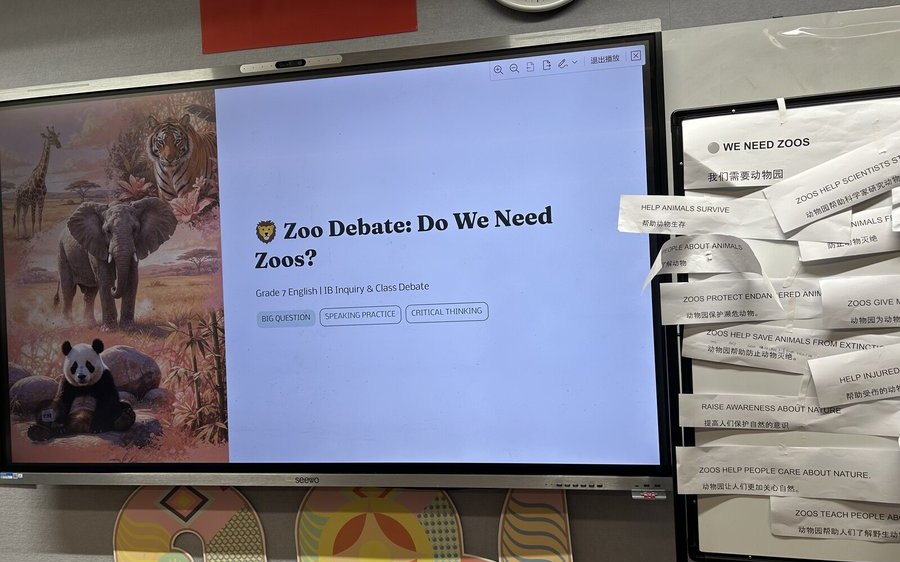
Grade 7 — "Do We Need Zoos?" Class Debate
A structured debate built on a genuinely open question. Students research both sides, write their arguments on strips, and post them to the board as the inquiry develops — so the wall fills up with the class's collective thinking before anyone has to speak. By debate day, every student has language to draw on, which matters enormously for ESL learners who would otherwise stay silent in an open discussion.
Bilingual Report Comments — Grades 2–8
Writing report comments in a bilingual school is harder than it sounds: Chinese and foreign teachers need to describe the same student in the same way, in two languages, without the meaning drifting. So I built a shared set of ready-made bilingual comments, organised by achievement level, that any teacher on the team can pick from and adapt when writing reports. It keeps our assessment language consistent across all English-medium subjects — and saves everyone hours at report time.

IELTS Speaking Practice — Grades 5–8
For older students preparing for exam-style speaking, I run mock speaking tests with prompts rewritten around things they actually know — Chongqing landmarks, local food, their own daily lives — instead of generic exam topics about places they've never been. I also made original illustrations for the speaking materials, so students have a visual anchor when the vocabulary is unfamiliar. The exam is just the excuse. What I actually want them to walk away with is fluency and confidence.
Moments from my classroom
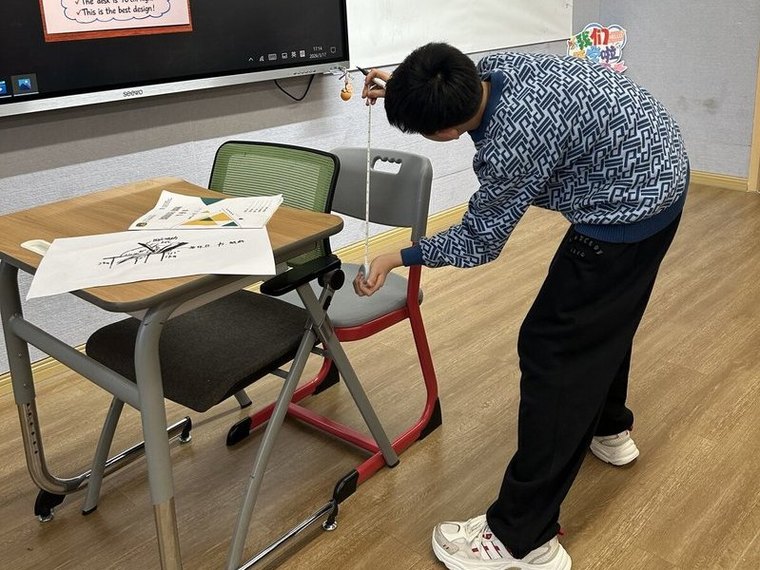
Class Performances
In my classes, presenting isn't a special event — it's how every unit ends. After each unit, students present their work in front of their classmates, usually as a group performance. It's low-stakes, it's regular, and it means that by the time my Selective class students step onto an actual stage, speaking English in front of an audience already feels normal. Two of those stage performances:

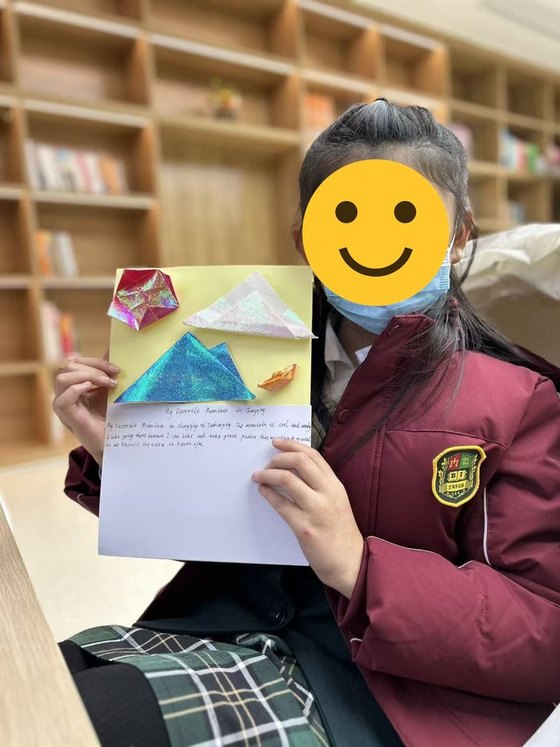
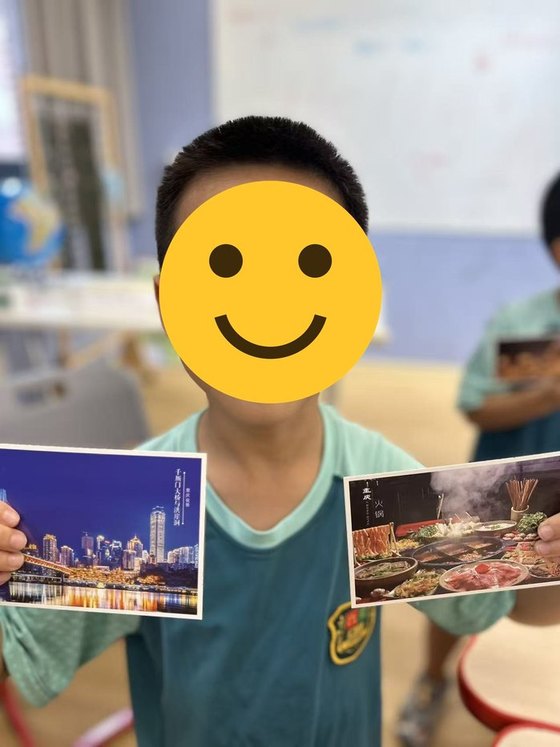
Students took the audience on a journey through their own city — using the English they had learned all semester to communicate real knowledge about the place they live, not just memorized vocabulary. They introduced Chongqing landmarks (the Yangtze, Hongyadong, the bridges and mountains, the monorail), talked about hot pot and local food, compared family life and daily routines here with other cultures, introduced animals native to Chongqing and their habitats, demonstrated five-senses language to describe the world around them — and closed by performing the Chongqing song together.
What I would change
This class taught me about timing. If a course is going to end with a big performance, the preparation has to start at the beginning of the semester. I see these students only once a week, and they come from three or four different grades, so there is far less time than it looks like on paper.
Next time I will plan backwards from the performance date from the first week.
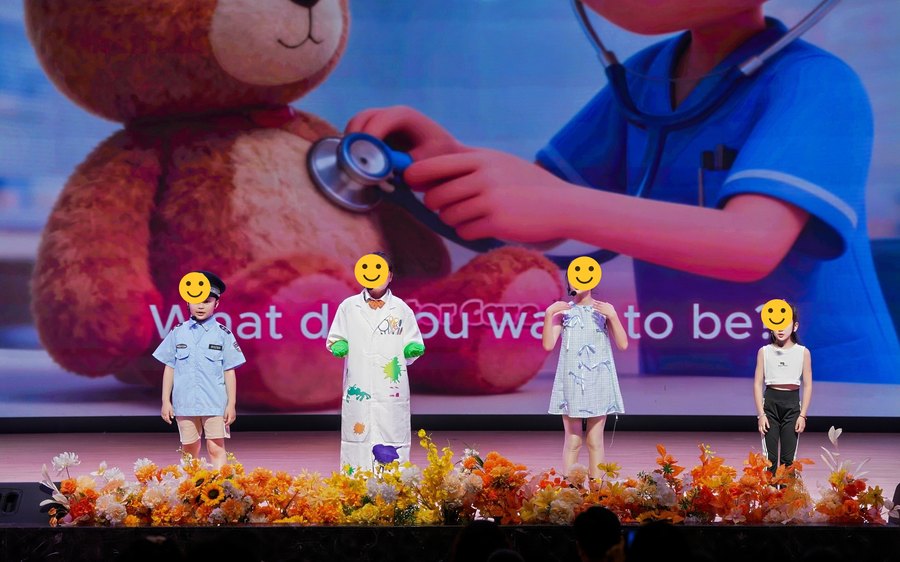
A short English performance celebrating students' dreams for the future. Four students from Grades 1–3 — an aspiring fashion model, a fashion designer, a scientist, and a police officer — each introduce themselves, explain why they chose their dream career, and speak about how they hope to help others through it. The individual presentations are connected with animated comic-style backgrounds, before all four come together to perform the opening of the "What Do You Want to Be?" song as the finale.
A note on student privacy
Any classroom or student images used on this site are AI-generated illustrations, not photographs of real students. Protecting student privacy is a non-negotiable ethical commitment in my practice — and a core value of the IB framework I work within. Real student work samples shared here are anonymised.